Animal Generators


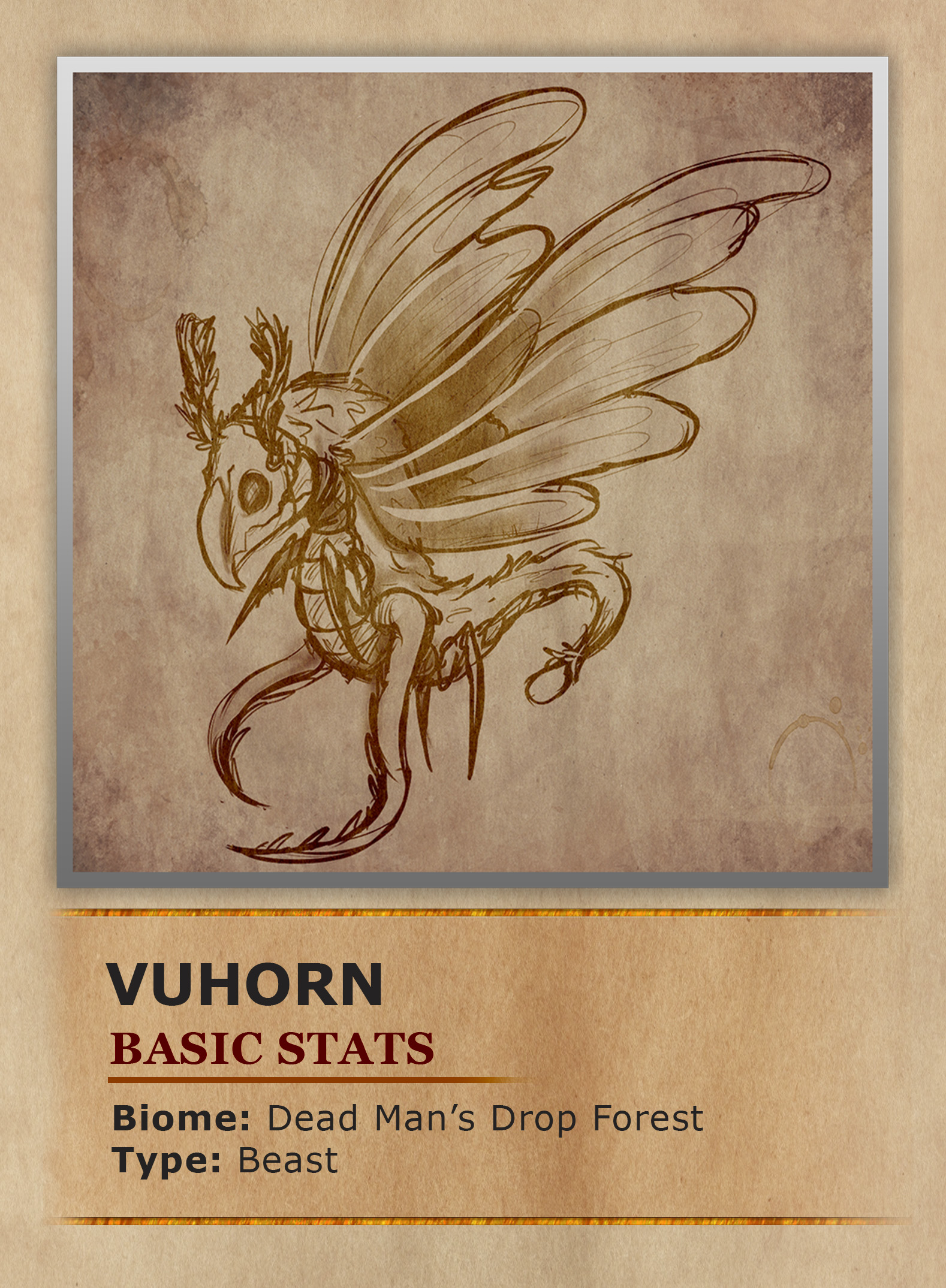
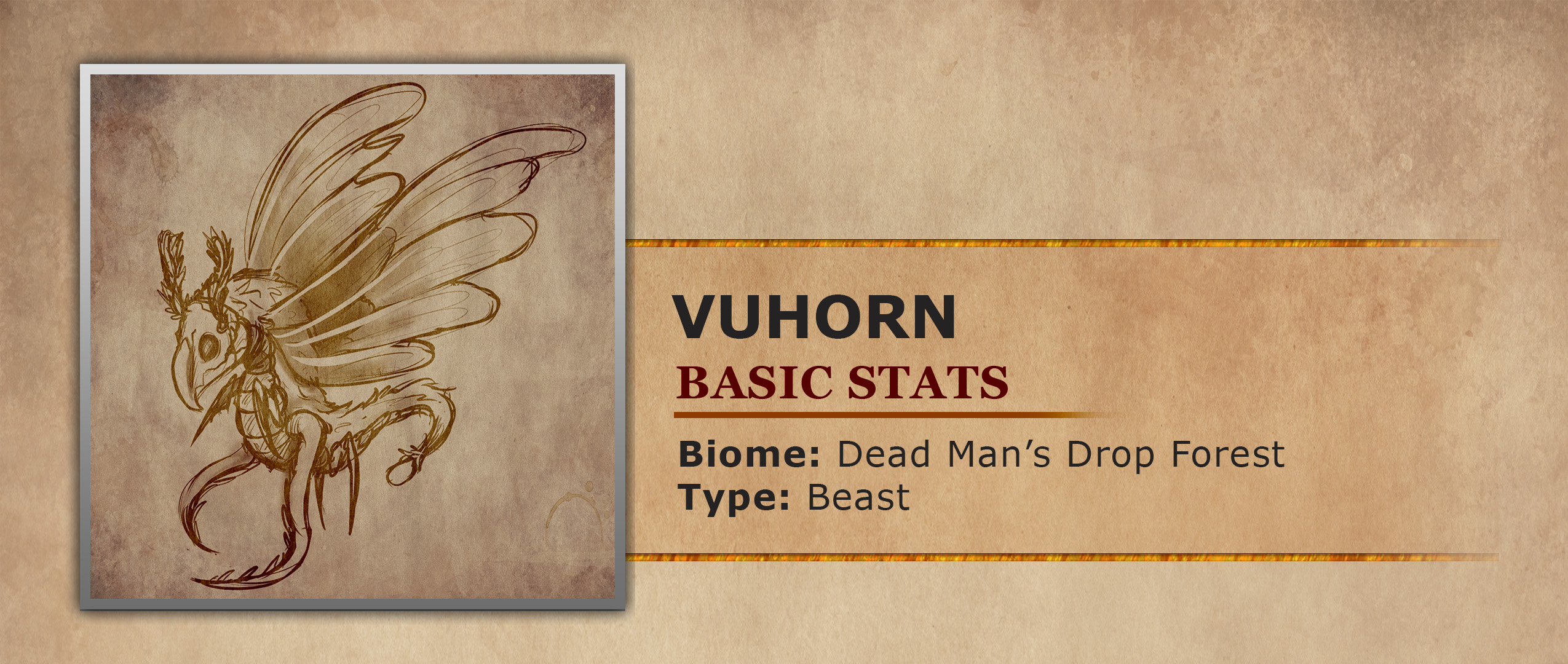
The undisputed aerial predators of Dead Man’s Drop forest are the Vuhorns. These large predatory insects have a slender almost serpentine body that is supported by velvety wings. Their faces are covered in a hard chitinous material, angled down into a sharp point. This face covering not only helps protect them from attack but also makes it easier to dig into fresh carcasses. Vuhorn’s are actually quite social insects among members of their chosen colonies. So during the daytime the Vuhorn colonies sleep nestled together within special plants known as Velheim. The symbiotic relationship the Vuhorns have developed with this plant provides them with safety during the daylight hours. Then after the sun sets the Velheim plant opens up and releases the Vuhorns to the forest. At night their semi-transparent wings make them hard to spot soaring among the forest's thick tree canopy. What you will see is their glowing bulbs at the bottom of their abdomen. The glowing bulb does give away their position but also provides them with a sinister advantage. The glow from their bulbs has a hypnotic effect to it, which lures prey in close. When the hypnotized prey gets within range, the Vuhorn makes its move. With lightning speed, two flexible tendrils with backward facing barbs spear into the prey and carry them off into the night, never to be seen again. When it is time for a Vuhorn to lay their eggs they must first find a suitable location. You might think they would find a hollowed out log or tree trunk but it is much worse. Vuhorns lay their eggs right on the forest floor where they would be easily spotted. This is so that the eggs are consumed by small forest crustaceans who eat seeds along the ground. The Crustaceans confuse the eggs with their typical food. Then days later the eggs hatch within the crustaceans and begin to eat them from the inside out. After the Vuhorn larvae emerge from the eaten crustaceans, they are ready to start their journey towards becoming the forest's apex predator.