Animal Generators


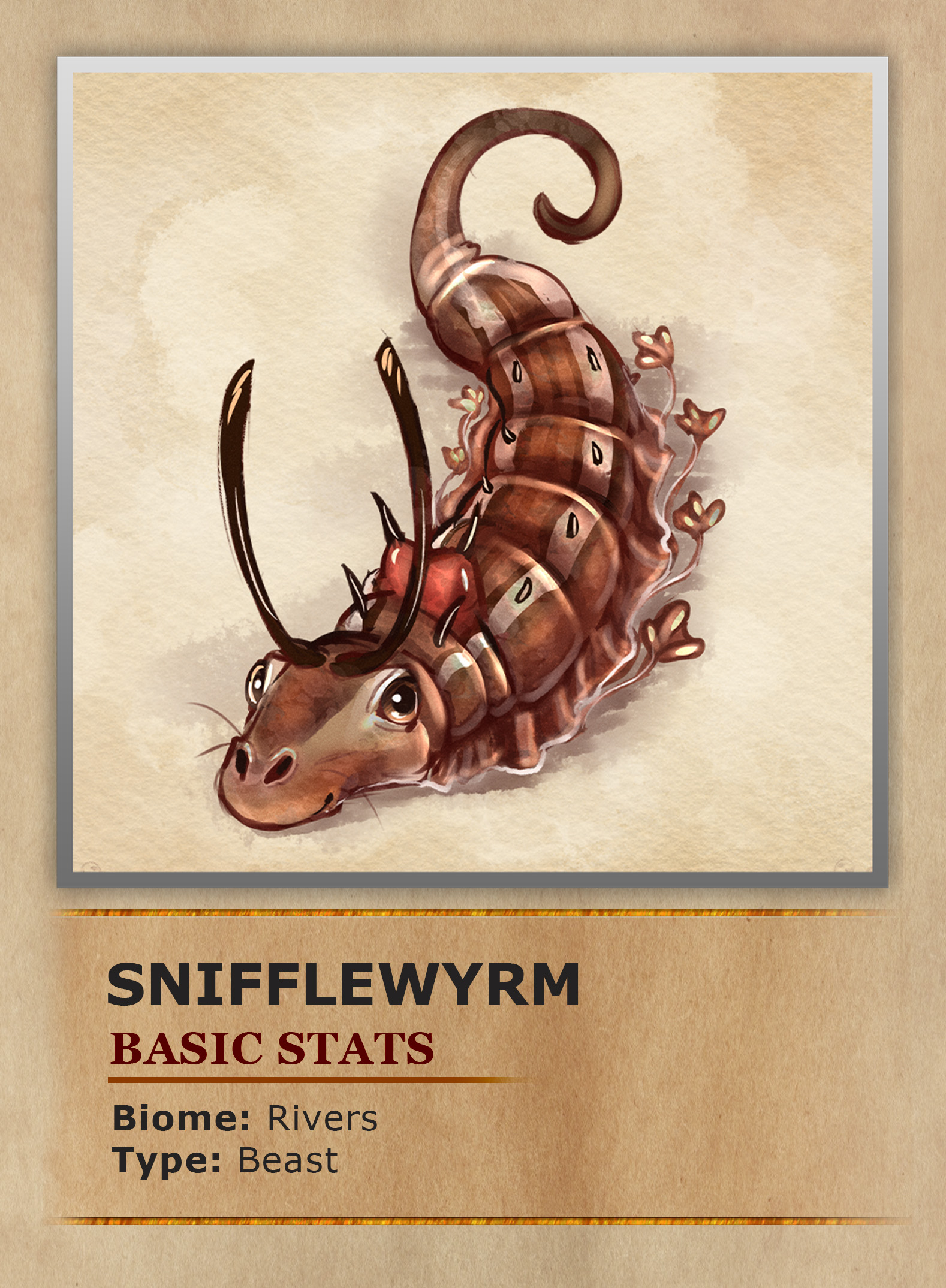
These massive invertebrates are often the largest animals in their environment. Despite that, the Snifflewyrm are almost never seen by the casual observer. Due to them spending their days underwater, crawling along the muddy riverbed. Only ever raising their heads above the surface occasionally to breathe. Utilizing their massive noses, in which they get their name from, to locate aquatic plants and algae. This seemingly endless search for food is what allows these voracious grazers to grow to such massive sizes. However, the Snifflewyrms start out quite small at only a few inches long. At this size Snifflewyrm young live primarily in mangrove forests. There the thick underwater roots and dense foliage provide better protection against predators. Then after growing for years in the mangroves they find their ways to the larger, more spacious river in which they were born. It is believed their large antennae are able to detect the planet's magnetic pull. Allowing them as juveniles to imprint on their rivers magnetic signature and as adults follow it back like a compass. Unfortunately, these magnetic antennas have a bit of a drawback. Certain minerals and metal objects can also be drawn towards them. Leaving some older Snifflewyrms antennas covered with metallic debris. Adult Snifflewyrms may be large but their slow speed and wit leave them vulnerable to predators like the Plated Riverling. To help combat this the Snifflewyrms developed sharp thorns along their body. The four largest thorns closest to their heads can also deliver a nasty poison. Even without the venomous thorns, Snifflewyrms social structure gives them protection in numbers. These close knit herds not only graze together but even sleep together along the riverbanks. Holding each other close with their prehensile tails. This practice helps keep bonds strong among individuals and ensures the herd can’t get separated by sudden flash floods or strong currents. These tails are also used by young Snifflewyrms to keep them securely attached to mangrove roots while feeding.
Lore Ideas - ARandomBird009, SilverSerpent705