Animal Generators


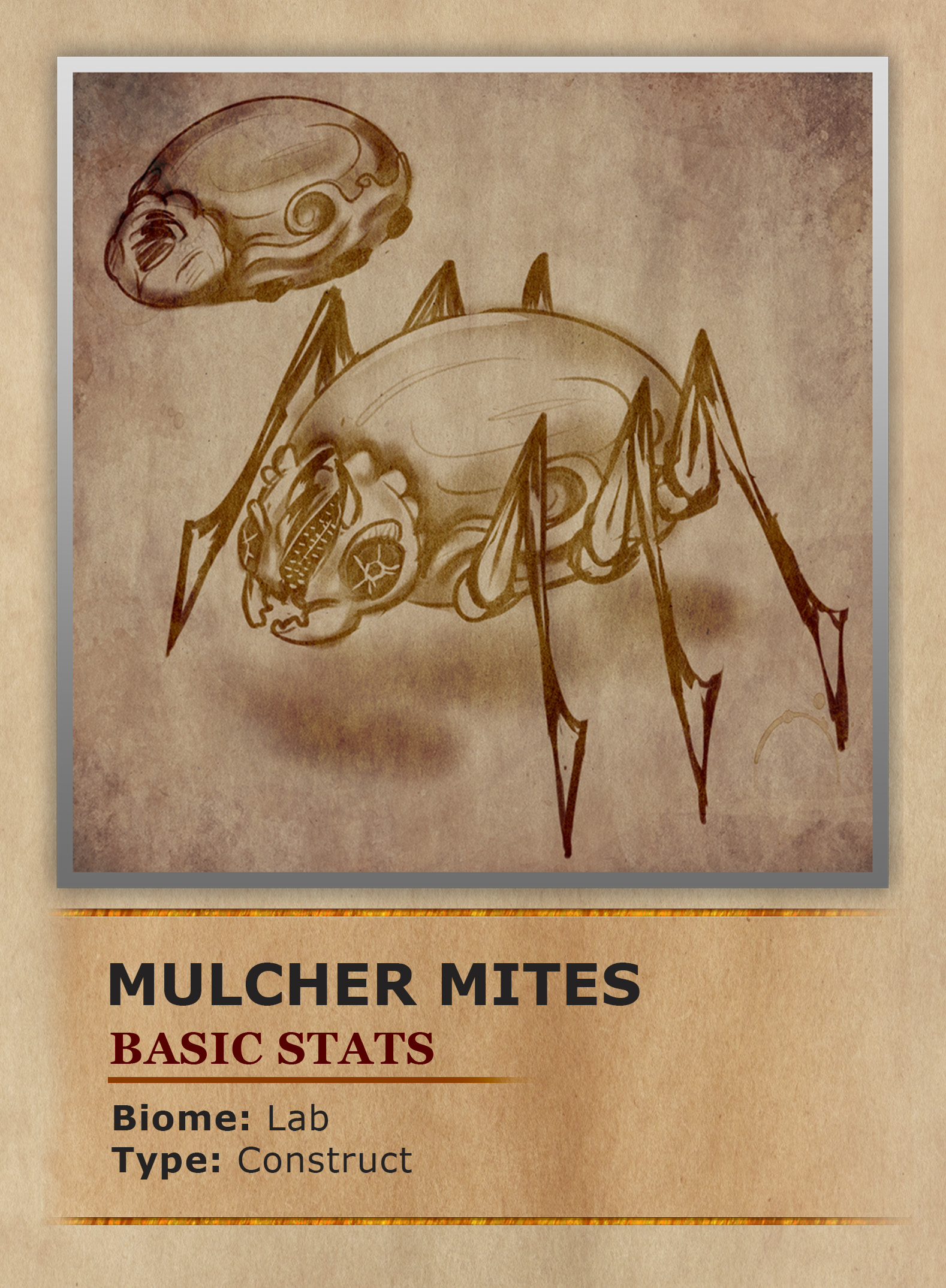
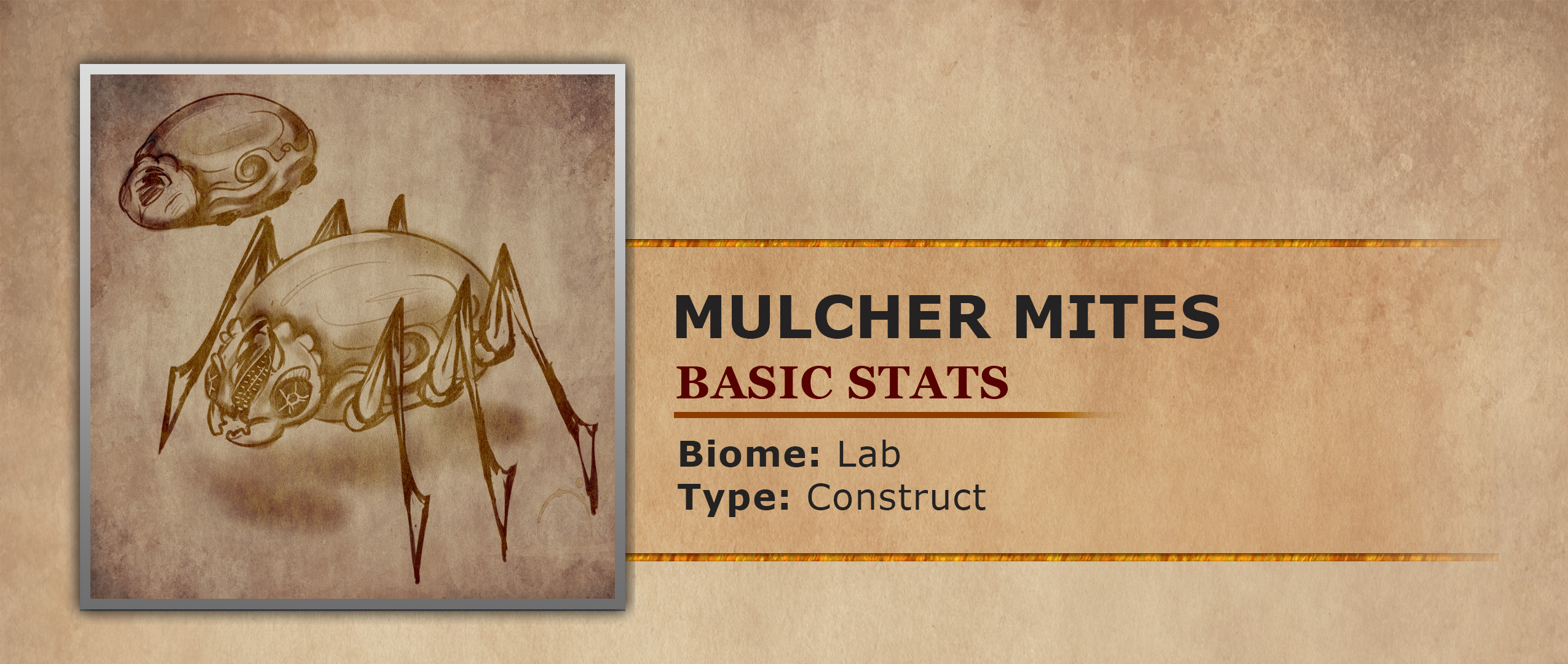
Mulching Mites: Mulching Mites are small constructs roughly the size of a small stone, though their dense composition makes them far heavier than their dimensions suggest. At rest they resemble decorative metal jewelry fragments, often lying in clusters across ruined floors. When active, the shell separates along invisible seams and unfolds into a six-legged predator-scavenger form. Their legs extend on rounded ball joints at the hip and knee, giving them spiderlike articulation and swift directional control. Each limb ends in a narrow blade-like foot able to grip stone, slice roots, or anchor to walls. Three frontal horns rise above the mouth and curve inward like the claws of a mechanical grappler. They use these appendages to lift debris, carry harvested matter, or pin struggling prey. Though tiny alone, a coordinated mass of mites can move objects far larger than themselves by hooking and dragging in unison. Mulching Mites were originally created in the laboratories of the abandoned Thunderstep Island, where alchemists and artificers pursued strange experimental ideas. Archived records name them Experiment C-3467. Their intended purpose was humble: to consume organic waste and convert it into nutrient-rich fertilizer for farms across the country. They were meant to be tireless laborers, not predators. Notes recovered from auxiliary archives mention adaptive digestion matrices, autonomous swarm intelligence, and self-propagation protocols. Whether these additions were ambition, desperation, or sabotage remains unknown. What is certain is that the mites ceased obeying limits placed upon them. Their grinders began processing wood, leather, stone, flesh, and eventually nearly any material not magically reinforced.